Looking for a last minute getaway? Give us a call or start a search

Search Last Minute
Last Minute Escapes

Holiday Let Rules & Regulations in England

1 October 2026
Phoebe Shipton

What to Check Before Welcoming Guests

Preparing a home for holiday letting can be really enjoyable, from choosing furnishings and fittings to sharing your favourite local places with guests. Alongside these decisions, there are practical responsibilities to get right. If you are planning to open a holiday home to paying guests, you need to check that letting is permitted, arrange suitable insurance and put the right safety measures in place.

At Keepers Cottages, we help owners understand what holiday letting involves and where specialist advice is needed. We have put together a guide that sets out the main checks for self-catering holiday accommodation in England and where to find more detailed advice.

Information checked as of 1st October 2026. This guide provides a general overview; property specific legal, tax and safety advice will be required before welcoming paying guests.


Oyster Bay Bedroom

1. Confirm that the property can be used as a holiday let

Before investing in furnishings, establish whether the property can be used for short-term holiday accommodation.

Planning permission is not always required. Your local planning authority will decide whether planning permission is needed, taking account of the use and its effects. For a home in Kent, contact the council responsible for the property. Explain your plans clearly, including whether you intend to let the entire home, how frequently it will be occupied and whether any building work is proposed.

Planning is only one part of this check. You should also review:

  • Your mortgage: confirm that your lender permits holiday letting.
  • Your lease: if the property is leasehold, check for restrictions on short stays or commercial use.
  • Title restrictions or covenants: ask your solicitor whether any conditions affect your plans.
  • Existing permissions: check whether planning conditions limit occupancy or how the property can be used.

2. Understand tax and ownership before you start

Holiday letting income needs to be considered as part of your wider tax position. How you own the property, your borrowing and your other income can all affect the outcome.

The Furnished Holiday Lettings or “FHL tax regime” ended in April 2025: from 6 April for Income Tax and Capital Gains Tax, and 1 April for Corporation Tax. The previous special treatment should therefore no longer be assumed when calculating the potential returns from a holiday home.

Before you begin, speak to an accountant about:

  • How your letting income should be reported.
  • Which expenses you can claim and what records to keep.
  • How mortgage interest and other finance costs are treated.
  • How joint ownership affects your position.
  • The implications of owning personally or through a company.
  • Any relevant VAT or digital tax reporting obligations.

What works for one person may not work for another – it is entirely individual. Moving a property into a company, for example, is a decision to assess carefully with professional advice rather than a straightforward administrative change.

We recommend keeping records from the outset as this will make life easier. Retain all booking statements, invoices, receipts and details of expenditure so your accountant has a clear picture of the business.

3. Will you pay council tax or business rates?

Holiday homes in England can fall under either council tax or business rates, depending on whether they meet the criteria for commercial self catering accommodation.

Under the current rules, a property qualifies for business rates assessment when all of the following apply:

  • It is let commercially for short stays of 28 nights or fewer.
  • It was available for commercial short term letting for at least 140 nights in the previous 12 months.
  • It was actually commercially let for at least 70 nights in that period.
  • You intend to make it available for commercial short term letting for at least 140 nights in the next 12 months.

If the property meets the above criteria, you need to apply to the Valuation Office. Simply advertising a home for holiday letting does not mean that you are eligable.

Small business rates relief may be available, depending on the rateable value of your property and your circumstances. This should also be checked carefully.

If your property remains within council tax, a second home premium may apply. Councils in England have been able to charge an additional premium of up to 100% since April 2025, subject to the relevant rules and exceptions. You will need to check with your local council to see if this applies.

Your plans for personal stays matter here, as time reserved for family or friends use affects the number of nights available for commercial bookings, so it is important to consider that alongside your income expectations.

4. Make fire and guest safety specific to your home

Once you are ready to welcome paying guests, safety needs to be considered in the context of holiday accommodation. Guests will be unfamiliar with the layout, appliances and escape routes, even if you know the home inside out. For more information, you can see our guide to fire safety.

Start with a suitable fire risk assessment to identify the risks at your property and the precautions needed to address them. You will need to record the assessement or better still, have this carried out by a professional fire risk assessor, and keep it under review.

At Keepers Cottages, we work closely with our fire safety advisors, SAMS Ltd, who carry out professional fire risk assessments for our holiday homes.

Having a tailored approach matters, you cannot simply follow a generic ‘holiday let checklist’ and hope that it works for your home. This could lead to unnecessary expenditure or leave something important unaddressed.

Consider the wider satety and responsibilities matters. Where gas appliances are provided, you will need annual checks by a Gas Safe registered engineer. Electrical installations and appliances are also needed. Looking beyond this, you will need to consider how guests use your home. Consider stairs, handrails, windows, furniture, balconies and other features such as hot tubs, pools and wood burners. Clear instructions help, but you also need to think about having the relevant safety equipment and precautions in place.

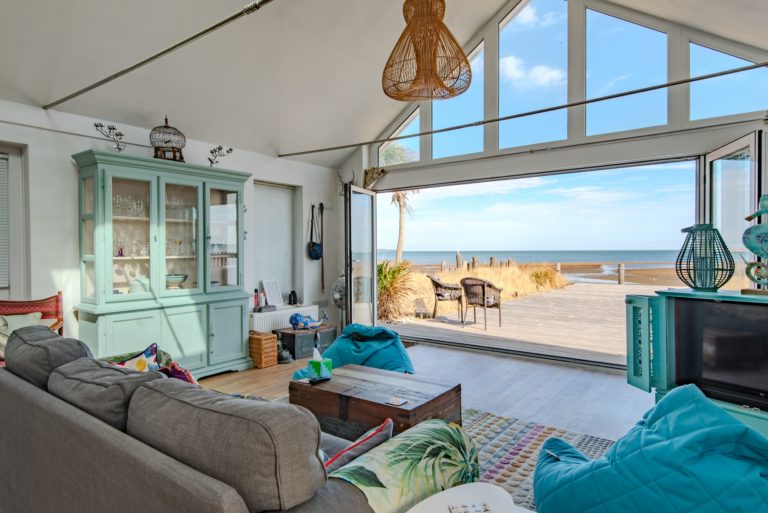
The Beach Hut, Seasalter

5. Arrange insurance and clear responsibilities

You will need to tell your insurer that the property will accommodate paying holiday guests.

Discuss cover suitable for the building, contents and public liability, and ask about accidental damage, malicious damage and loss of letting income. Explain any features that could affect the policy, such as a wood burner, hot tub, outbuilding or periods when the home will be empty. Government guidance recommends insurance specifically suited to holiday letting. You can read more on the Gov.uk website.

It is equally important to understand who will be responsible for arranging checks, reporting and repairs. Guests should also receive clear booking terms and an accurate description of the property. Details such as steep stairs, shared spaces or an owner living on site can materially affect whether a home suits their stay.

Keep an eye on registration requirements

At the time of review, 1st October 2026, GOV.UK’s self-catering guidance describes England’s proposed national short-term let registration scheme as not yet in force. Check the latest official position before launching.

Registration is separate from planning permission and safety compliance. Preparing an organised property file now will make future requirements easier to manage.

As members of PASC UK (The Professional Association of Self Catering), Keepers Cottages will be able to keep holiday let owners informed of any changes.

Start the conversation & get started

At Keepers Cottages, we can discuss the practical preparation of your Kent holiday home and how our services fit around your responsibilities as an owner. An early conversation helps you identify what needs attention before your first booking. Get in touch with us at Keepers Cottages on 01304 382044 or email [email protected]

Share this post
About Phoebe Shipton

Phoebe Shipton is Marketing Director at Keepers Cottages, having joined the business in 2020 following her studies at the University of Manchester. Phoebe focuses on showcasing Kent’s destinations and independent businesses to guests, alongside sharing practical insights for holiday home owners. Based in the heart of the Kent countryside, she enjoys exploring with her working cocker spaniel, Winston, who regularly features in Keepers’ dog-friendly content and occasionally joins photoshoots at new holiday homes.

Join our Newsletter

Join our newsletter for a monthly round-up of events, news, and happenings in and around Kent!
For more information about how we will use your data please view our privacy policy.